

Everyone Warned Me About Adopting a Teen — Then His Secret Changed Everything
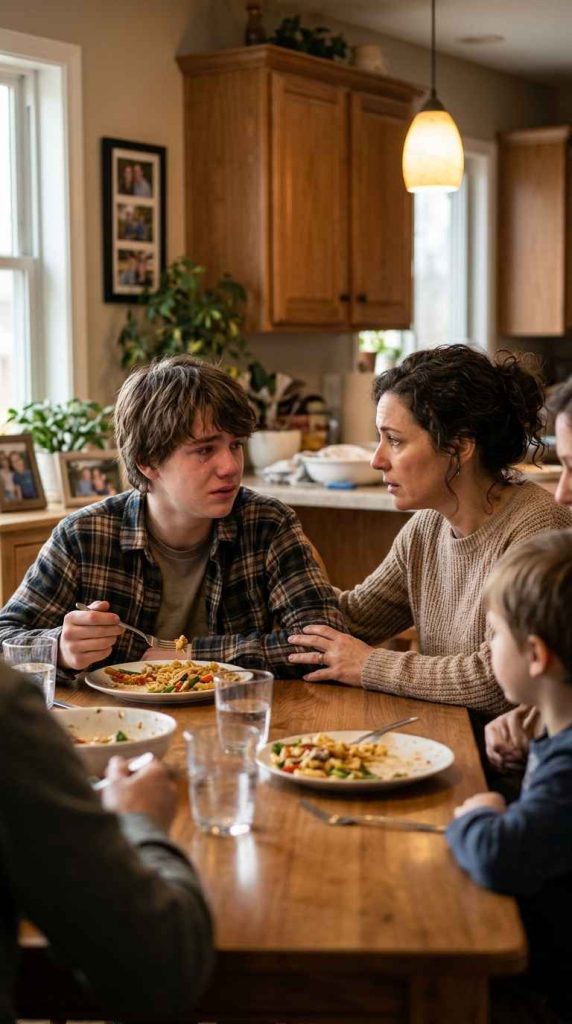
Luke’s fork struck the dinner plate as his hands began to tremble.
“Mom, I need to tell you why,” he whispered, tears filling his eyes.
It had been only two weeks since his adoption became final.
At 16, Luke had already lived through ten foster homes, and nearly everyone had warned me that bringing him into my family would end badly.
I was 47 and had spent three years living alone after losing my husband and my two children, Grace and Noah. Their untouched bedrooms remained behind closed doors, while our mortgage-free house had become painfully quiet.
But Luke hadn’t seemed anything like the frightening picture people had painted.
He remembered that Grace hated raisins. He repaired my loose porch step without being asked. He moved through the house carefully, almost as if he were afraid to take up too much space.
Little by little, the silence in the house began to feel different.
Then, that evening, Luke looked across the table and told me something that broke my heart.
He said I would probably regret making him my son.
Then he revealed that he had a nine-year-old half-sister named Emma.
They had entered foster care together. But when a family offered to adopt only Emma, 14-year-old Luke made a decision that would shape the next several years of his life.
He agreed.
He wanted his little sister to have a stable home, even if it meant losing the chance to grow up with her.
But after Emma was adopted, Luke deliberately pushed away every family that considered taking him in.
He was terrified that Emma would somehow believe he had chosen another family over her.
So whenever someone came close to becoming his permanent family, he found a reason to make them leave.
He had planned to do the same thing with me.
But something changed.
The porch repairs.
The meatloaf.
The ordinary evenings.
The small routines that most people would never think twice about slowly began to feel like home.
Luke had stopped seeing my house as another temporary place.
He had started seeing it as his home.
Then he showed me a box.
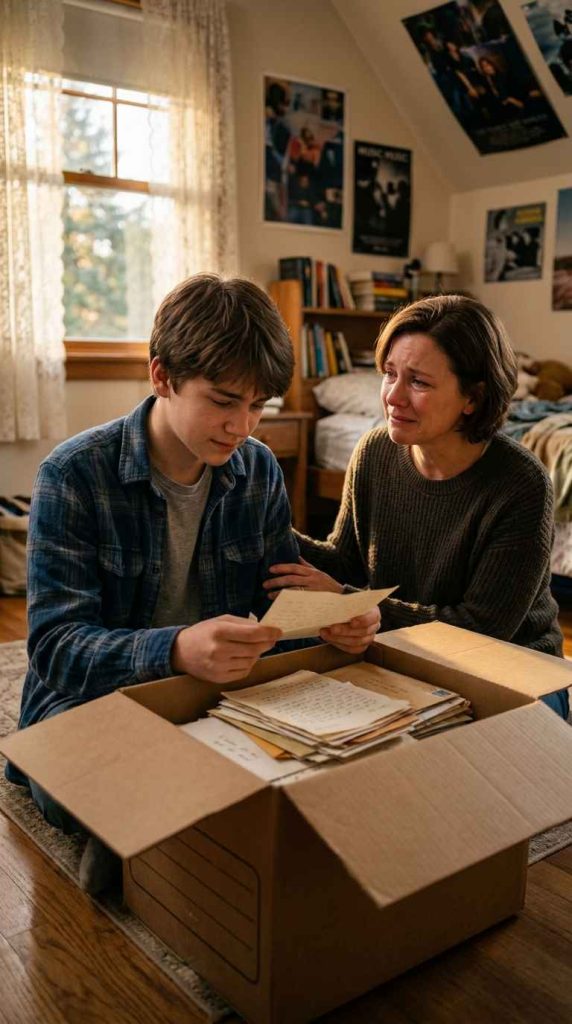
Inside were four years’ worth of unanswered letters.
Every letter ended with the same sentence:
“I’m still your brother.”
The next morning, I contacted Luke’s caseworker and asked for answers.
With help from an attorney familiar with adoption records, we learned that Luke’s letters had reached Emma’s adoptive parents. Communication, however, had been restricted while Emma adjusted to her new life.
There had been no insurance dispute, financial scheme, mortgage problem, or inheritance issue separating the siblings.
There had simply been adults postponing a painful conversation until four years had passed.
Eventually, a supervised reunion was arranged.
Emma’s parents placed a storage bin in front of Luke.
Inside were dozens of letters and replies Emma had written but never sent.
Then Emma appeared on the staircase.
She saw Luke.
For a moment, she ran away.
Luke’s face fell.
But only moments later, Emma returned.
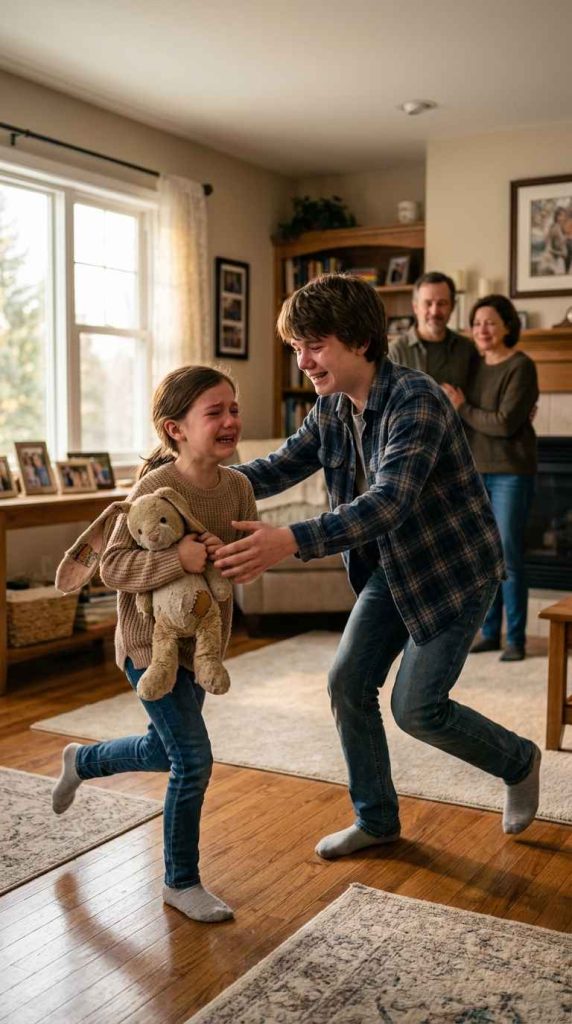
In her hands was the worn stuffed rabbit Luke had given her years earlier.
“You said Mr. Buttons would keep me safe until you came back,” she cried.
Then she ran into his arms.
One embrace couldn’t restore every missed birthday or erase four years of uncertainty.
But it reopened a door that everyone had thought was closed.
The supervised visits eventually became phone calls. The phone calls became shared celebrations. And, over time, the siblings were able to spend weekends together again.
Months later, I found Luke repairing that same porch step.
Emma stood nearby, offering hilariously confident instructions about how he should use the hammer.
The two began arguing over the repair, just as siblings do.
Then Luke casually called me “Mom.”
He immediately glanced toward Emma.
I recognized the fear in his expression.
For so long, he had believed that loving me might somehow mean betraying his sister.
Emma simply rolled her eyes.
“Ask your mom if she can help,” she said.
Luke laughed.
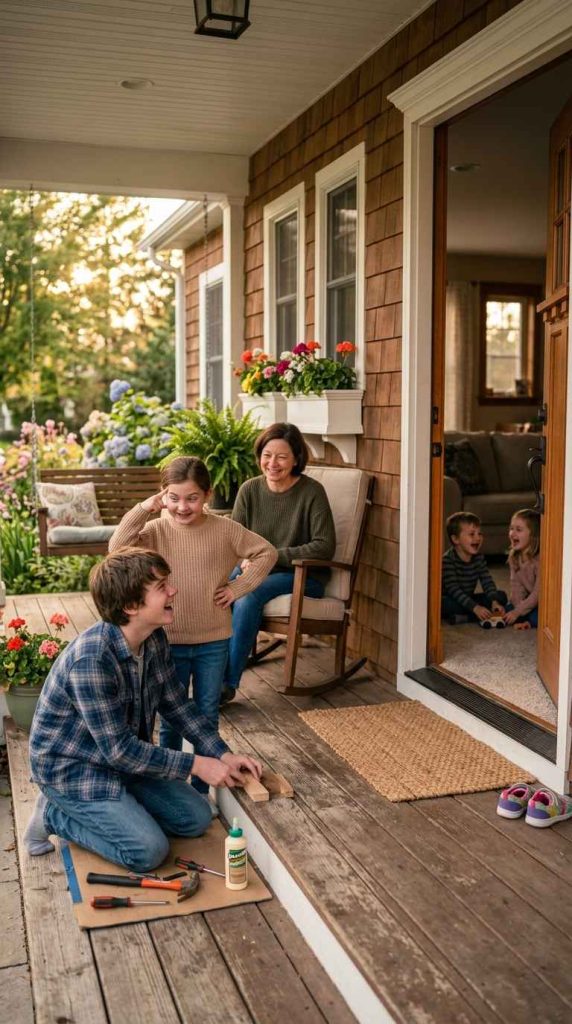
And for the first time, there was no fear behind it.
Their playful bickering filled the house that had once echoed with silence.
Everyone had warned me that Luke was damaged.
That he would be difficult.
That adopting a teenager with so much history would end badly.
But they had misunderstood him.
Luke wasn’t broken.
He was a devoted older brother who had spent years believing that loving someone meant sacrificing his own happiness for them.
He had given Emma the family he desperately wanted for himself because he believed she deserved it more.
Now he was finally learning something different:
Becoming my son hadn’t meant losing his sister.
There was room for both of them.
And somehow, the house that had once felt painfully empty was beginning to sound like a family again.
0 Comments