

I Gave My Grieving Best Friend My Childhood Home—Then I Found Her Inside With My Mom
I truly believed I was doing the right thing when I offered my best friend my childhood home after her mother passed away in August 2025.
She had been struggling with grief, and her noisy apartment seemed to make everything harder. I wanted to give her somewhere peaceful—a place where she could slow down, rest, and have some space to heal.
The house had been part of my life for years. It held countless memories, but I knew it was sitting mostly unused. Letting my friend stay there felt like the kind of thing you do for someone you love.
At first, it seemed to help.
She sent me pictures of sunsets from the backyard and told me she was finally sleeping better. She said the quiet felt comforting.
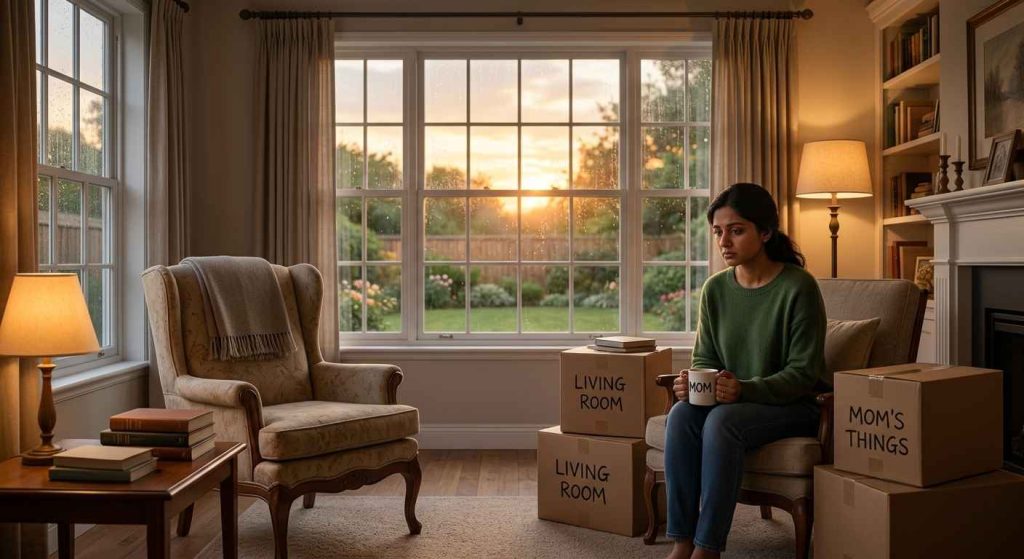
I was relieved.
I checked on her regularly, brought groceries when she needed them, and made sure she had everything she required. Maybe I checked in too often, but I thought that was what being a good friend meant.
Then, slowly, things changed.
Her Messages Started Getting Shorter
At first, I barely noticed.
Her replies became shorter.
Then hours would pass before she answered.
Eventually, an entire day could go by without hearing from her.
Whenever I asked if she was okay, she gave me the same answer.
“I’m just tired.”
I tried to respect her privacy.
Grief isn’t something you can fix for another person. Sometimes people need quiet, and I didn’t want to make her feel watched or pressured.
But after three days without hearing from her, I couldn’t ignore the worry anymore.
I decided to drive over.
I told myself I was only going to drop off some groceries.
But when I arrived, I immediately noticed something strange.
My Key No Longer Worked
I walked up to the front door and tried my key.
Nothing.
I tried again.
Still nothing.
The locks had been changed.
My stomach tightened.
I knocked.
No answer.
I knocked again, louder this time.
My mind immediately started imagining everything that could have gone wrong.
Had she fallen?
Was she sick?
Was something wrong inside the house?
I knocked once more.
Finally, the door opened.
And what I saw left me completely speechless.
My best friend was sitting on the couch.
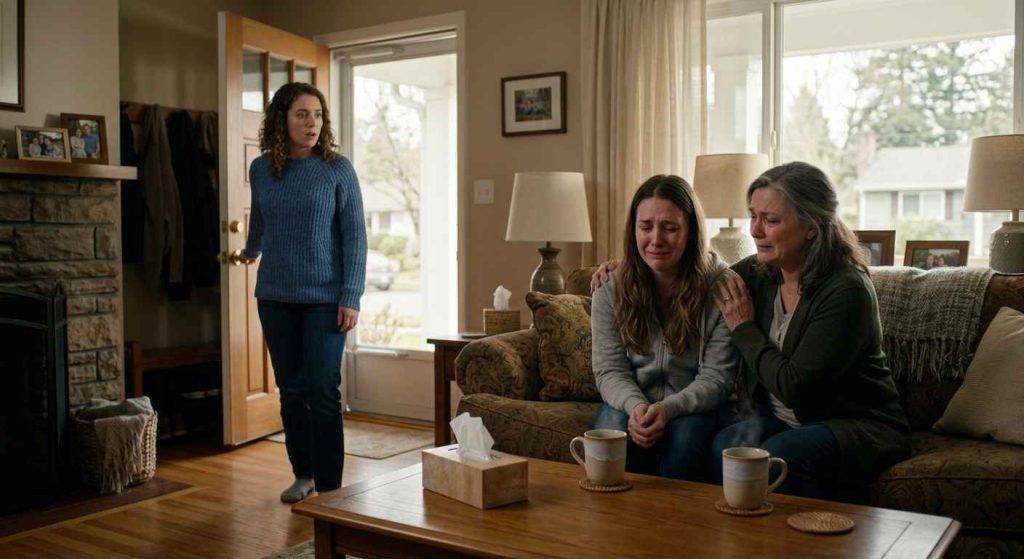
She was safe.
But she wasn’t alone.
Sitting beside her was my mother.
Both of them had tear-streaked faces. A box of tissues sat between them, along with two warm mugs of tea.
For a moment, I couldn’t understand what I was seeing.
I had prepared myself for something terrible.
Instead, I had walked into a quiet conversation I clearly wasn’t expecting.
“Why Didn’t You Tell Me?”
My friend looked at me with an expression that was difficult to describe.
There was guilt in her eyes.
But there was also relief.
My mother stood up and gently explained what had happened.
She had suggested changing the locks so my friend would feel safer and more settled in the house.
I looked at my friend.
“Why didn’t you tell me?”
She lowered her eyes.
“I didn’t want you to worry.”
Then she finally explained what had been happening.
She wasn’t angry with me.
She wasn’t trying to push me away.
She simply felt overwhelmed.
I had been there for her in every way I knew how. I called, visited, brought food, checked on her, and constantly reminded her that she wasn’t alone.
But she realized something important.
Sometimes a person doesn’t just need a friend.
Sometimes they need something different.
What She Really Needed
My friend had lost her mother.
And while I could listen to her, support her, and sit beside her through difficult days, I couldn’t fill the role her own mother had left behind.
My mom could offer something different.
She could sit quietly without expecting an explanation.
She could make tea.
She could listen to stories about my friend’s mother.
She could understand some of the complicated emotions that come with losing a parent.
My friend finally looked at me.
“I love you,” she said quietly. “I just didn’t want everything to become your responsibility.”
That sentence stayed with me.
For days, I had interpreted her silence as rejection.
I thought maybe I had done something wrong.
Maybe she was upset with me.
Maybe giving her the house had somehow changed our friendship.
But I had misunderstood the situation completely.
Her distance wasn’t rejection.
It was part of her healing.
Sometimes Helping Means Giving Space
I sat down with them.
For the first time in days, I stopped trying to solve anything.
We talked.
My mother told stories.
My friend cried.
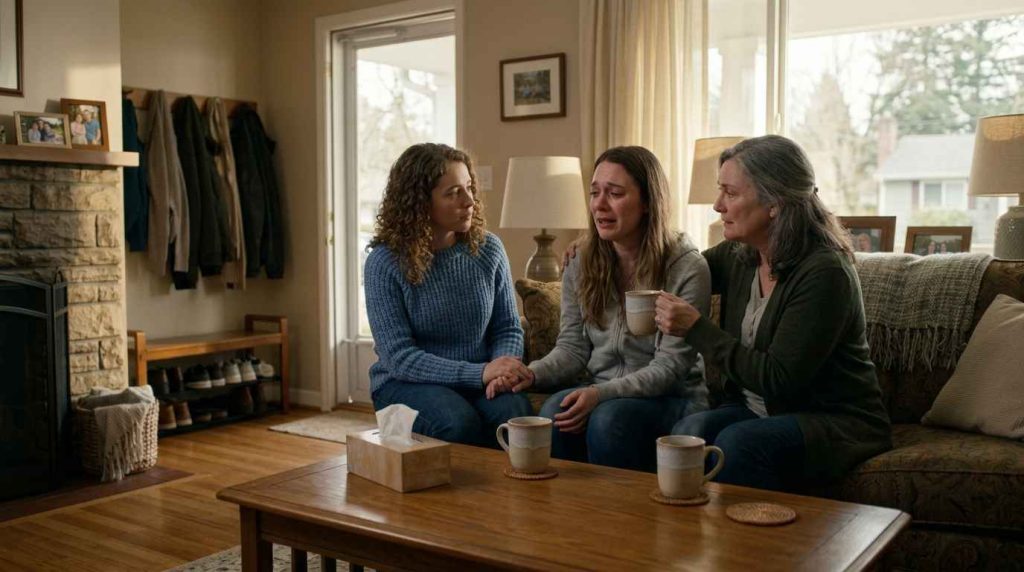
I listened.
And slowly, the tension in the room disappeared.
I realized that love doesn’t always mean being the person someone turns to for everything.
Sometimes loving someone means accepting that you can’t meet every need they have.
And that’s okay.
I had wanted to give my friend a safe place.
Maybe I had done exactly that.
The house gave her quiet.
My mother gave her a different kind of comfort.
And I could simply remain her friend.
The Locks Were Never About Me
Before that day, I had been hurt by the changed locks.
I thought they were a sign that my friend no longer trusted me.
But once I understood what had happened, I saw them differently.
They weren’t meant to shut me out.
They were meant to help her feel that the house was becoming her own temporary safe space.
That distinction changed everything.
My friend hadn’t stopped loving me.
She had simply learned that healing sometimes requires different kinds of support from different people.
And instead of feeling replaced, I felt grateful.
Grateful that my mother had stepped in.
Grateful that my friend felt comfortable enough to accept help.
And grateful that I had been able to give her the house in the first place.
Real Love Makes Room
That evening, before I left, my friend hugged me tightly.
“Thank you,” she whispered.
I hugged her back.
“You don’t have to thank me.”
She smiled through her tears.
My mother watched us from the kitchen, quietly making another cup of tea.
Everything suddenly felt different.
The friendship hadn’t become smaller.
It had become more understanding.
I learned something that day that I wish more people understood:
You can love someone deeply without being everything they need.
Sometimes the best thing you can do is offer support, then allow other people to provide the kind of comfort you cannot.
Real love doesn’t compete for a place in someone’s life.
It doesn’t keep score.
It doesn’t ask, “Why didn’t you come to me?”
It simply asks, “What do you need?”
And sometimes the answer isn’t another conversation, another visit, or another solution.
Sometimes it’s a quiet room.
A warm cup of tea.
A person who understands.
And the freedom to heal in your own way.
Because real love doesn’t compete.
It makes space—even for the roles we cannot fill.
0 Comments