

We have all been there. You are going about your daily routine, minding your own business, when suddenly you feel an irresistible urge to scratch your arm. You look down and notice a cluster of raised, red patches. For most of us, our immediate reaction is to brush it off. We assume it is a minor bug bite, a reaction to a new laundry detergent, or just a random skin irritation that will magically disappear on its own without any treatment.
In many cases, this casual dismissal is perfectly fine. The human body is resilient, and our skin often encounters minor irritants that cause temporary flare-ups. However, there is a very specific scenario where ignoring these skin symptoms can turn incredibly dangerous—and it can happen faster than you might ever imagine.
When sudden skin reactions, like red patches or bumps, appear alongside breathing difficulty, the situation instantly escalates from a minor annoyance to a critical, life-threatening medical emergency. In these terrifying moments, every single second counts, and knowing exactly what your body is trying to tell you can quite literally save your life.
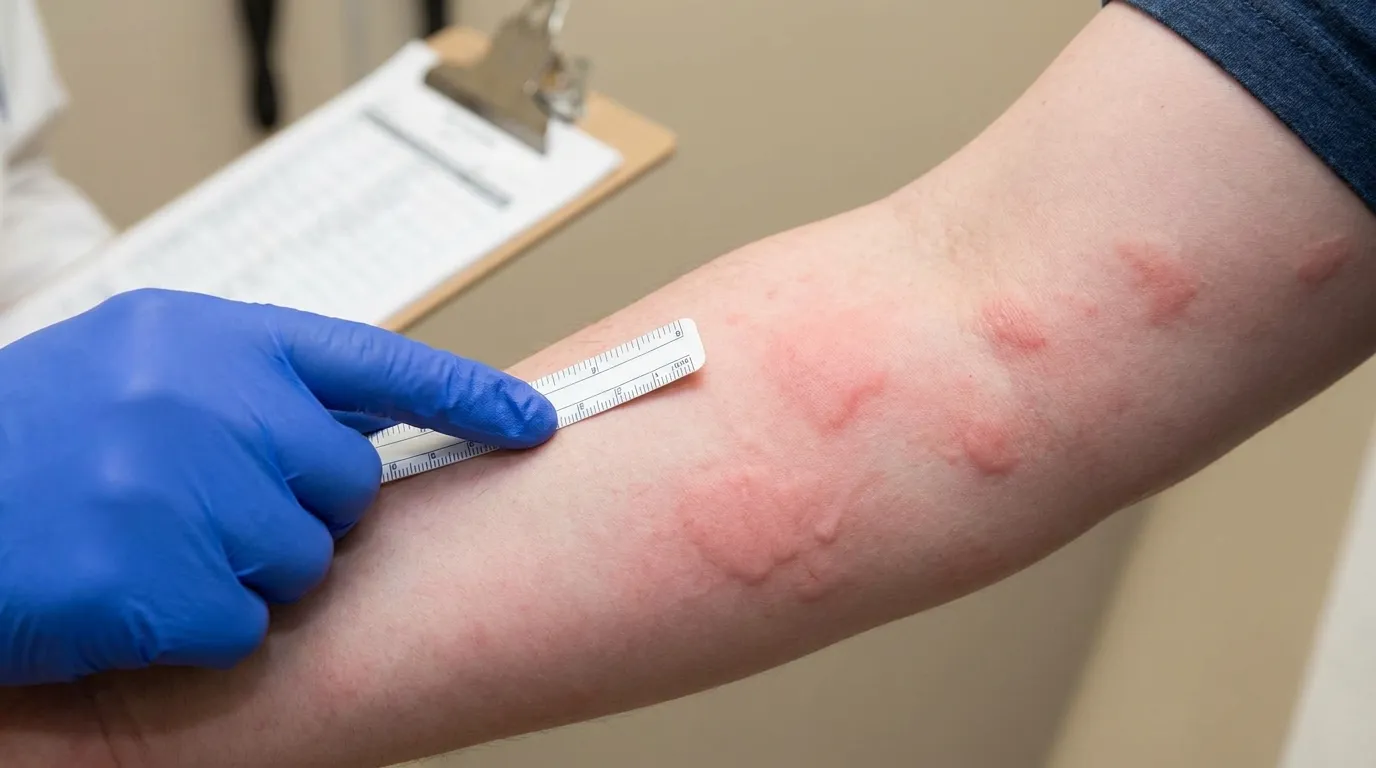
Sudden, raised red welts on the skin are often the first visible warning sign of an allergic reaction.
Decoding the Skin: What Do These Symptoms Actually Mean?
Before we can understand the danger, we have to understand what we are looking at. Those raised, itchy, red patches that seem to appear out of nowhere are most commonly known as hives (the medical term is urticaria).
Hives are essentially your immune system sounding an alarm. When your body encounters something it perceives as a threat—even if that threat is completely harmless to most people, like a peanut or a speck of pollen—it releases a chemical called histamine. Histamine causes your blood vessels to expand and leak fluid into the surrounding tissues, which results in the classic signs of hives.
If you are experiencing hives, you will typically notice the following characteristics:
- Swollen, Irregular Welts: They rarely form perfect circles. Instead, they look like irregular red, pink, or skin-colored welts that are slightly raised above the surface of your normal skin.
- Intense Itching or Burning: The urge to scratch can be absolutely maddening. In some cases, the skin might feel hot to the touch or produce a burning, stinging sensation.
- Rapid Spreading: Hives have a notorious reputation for moving around. They can appear suddenly on your chest, disappear an hour later, and then reappear on your legs. They can spread quickly across large areas of the body.
Now, let us be perfectly clear: hives alone can be relatively harmless in some cases. People get them from stress, viral infections, or mild contact allergies. If you only have hives and you feel completely fine otherwise, you might just need an over-the-counter antihistamine and some rest.
But when hives occur alongside breathing problems, the narrative changes entirely. This combination is the ultimate red flag. It signals that the reaction is no longer just on your skin—it has become a systemic reaction happening throughout your entire body.
The Tipping Point: When a Rash Becomes a Medical Emergency
The presence of breathing difficulty is the absolute key warning sign that you are crossing the line into dangerous territory. When your immune system overreacts to this extreme degree, it doesn’t just affect your skin; it targets your respiratory system and cardiovascular system.
This massive, whole-body overreaction is called anaphylaxis. Anaphylaxis is a severe, rapidly progressing, and potentially life-threatening allergic reaction. It requires immediate, aggressive medical attention. You cannot “wait it out.” You cannot “sleep it off.”
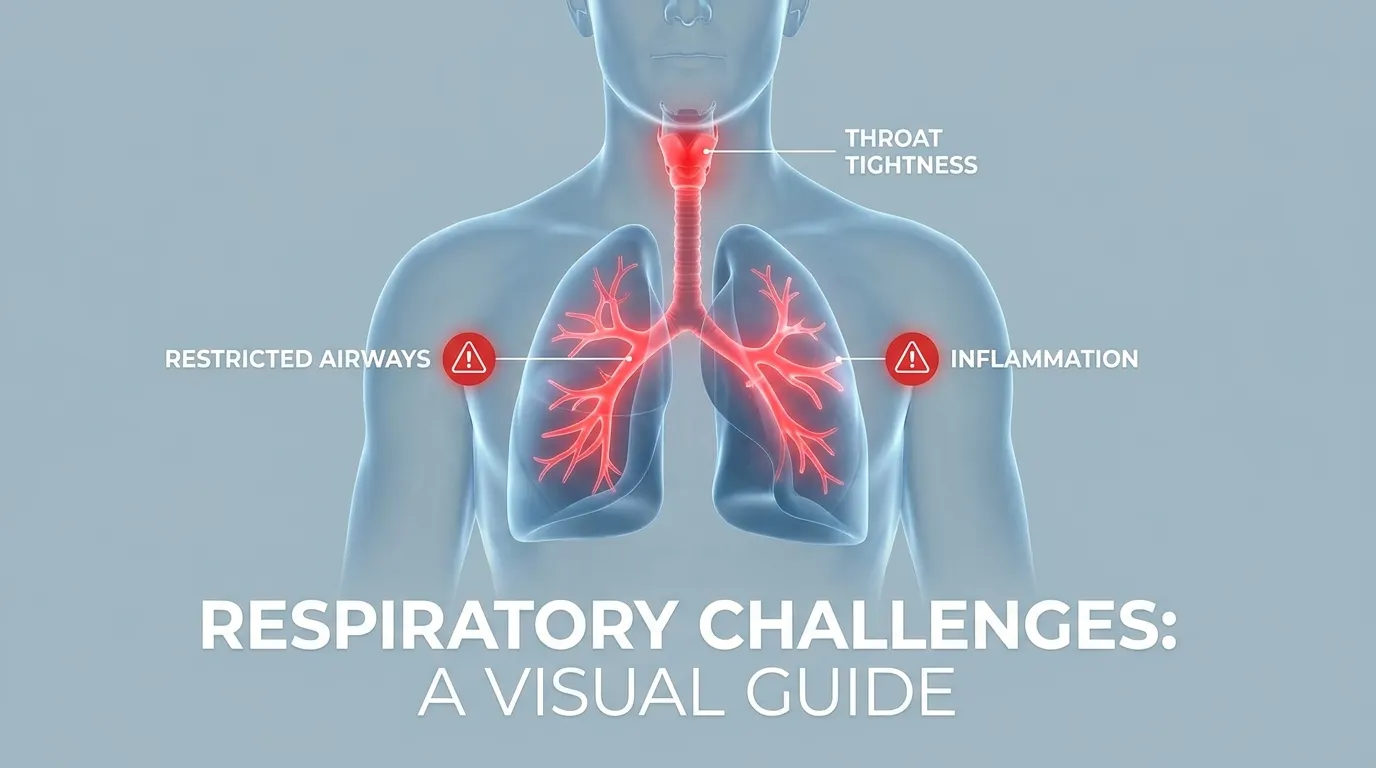
During anaphylaxis, the airways can swell and constrict rapidly, making breathing incredibly difficult.
If you or someone around you breaks out in a rash or hives, you must immediately become a detective and watch for the following critical symptoms:
- Shortness of Breath or Wheezing: This might feel like you cannot catch a deep breath, or you might hear a high-pitched whistling sound when inhaling or exhaling.
- Tightness in the Throat or Chest: Many survivors of anaphylaxis describe this as feeling like a heavy weight is sitting on their chest, or like a hand is physically squeezing their windpipe shut. They may have trouble swallowing or feel like a lump is permanently stuck in their throat.
- Swelling of the Lips, Tongue, or Face: This is called angioedema. The swelling can be profound and distort the person’s features. If the tongue swells, it can physically block the airway, making breathing impossible.
- Rapid Heartbeat (Tachycardia): The heart begins to race as blood pressure dangerously drops, desperately trying to pump oxygen to vital organs.
- Dizziness, Confusion, or Fainting: The drop in blood pressure deprives the brain of oxygen, leading to lightheadedness, a feeling of impending doom, or a complete loss of consciousness.
- Gastrointestinal Distress: Sudden, severe stomach cramps, vomiting, or diarrhea occurring alongside the skin and breathing symptoms can also be a major red flag for anaphylaxis.
Crucial Rule of Thumb: If a skin reaction (like hives, redness, or intense itching) is joined by any one of the symptoms listed above, you must treat the situation as an immediate medical emergency. Do not second-guess yourself.
Unmasking the Triggers: Common Causes of Severe Allergic Reactions
You might be thinking, “I’ve never had a severe allergy before, so this doesn’t apply to me.” That is a dangerous misconception. While many people are well aware of their allergies from childhood, adult-onset allergies are incredibly common. You can safely eat a specific food for 30 years and suddenly, one day, develop a life-threatening allergy to it.
Anaphylaxis is an unpredictable beast, but it is typically triggered by a few usual suspects. These include:
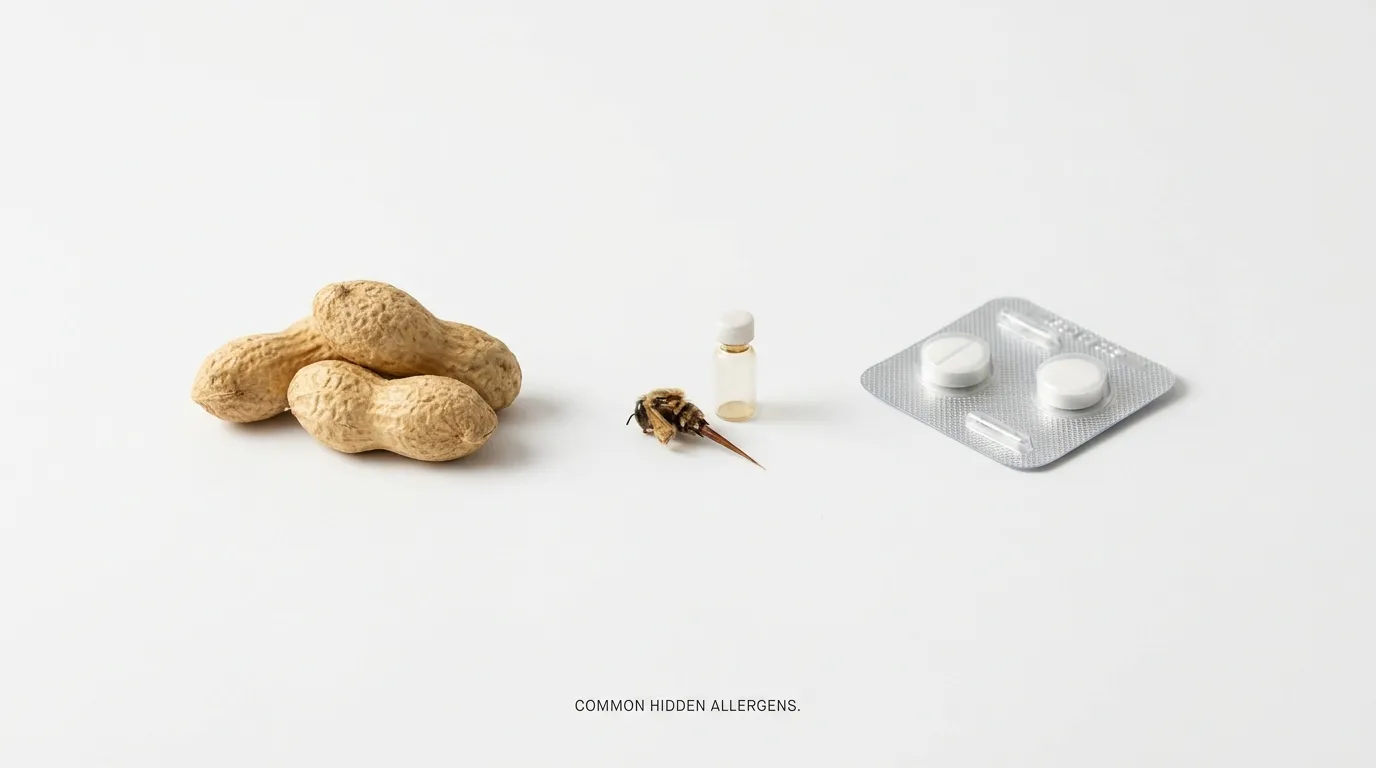
Foods, medications, and insect stings are among the leading triggers for sudden anaphylactic reactions.
- Foods: The most common culprits are peanuts, tree nuts (like walnuts, pecans, and almonds), shellfish (shrimp, lobster, crab), fish, cow’s milk, and eggs. Even a microscopic trace of the allergen, such as cross-contamination on a restaurant grill, is enough to trigger a massive reaction in highly sensitive individuals.
- Medications: Prescription and over-the-counter drugs are major triggers. Antibiotics (especially penicillin and related drugs), nonsteroidal anti-inflammatory drugs (NSAIDs like ibuprofen and aspirin), and certain pain relievers are frequently linked to severe reactions.
- Insect Stings and Bites: The venom from bees, wasps, yellow jackets, hornets, and fire ants can send the body into anaphylactic shock in a matter of minutes.
- Latex and Environmental Factors: Natural rubber latex (found in balloons, some medical gloves, and rubber bands) can cause severe reactions. Less commonly, extreme physical exercise or exposure to extreme cold can trigger exercise-induced or cold-induced anaphylaxis.
In some terrifying cases, the cause is never found. This is known as idiopathic anaphylaxis. Because triggers can be hidden or completely unknown, being able to recognize the symptoms is your first and most powerful line of defense.
The Lethal Danger of Delay: Why Immediate Action Matters
One of the biggest and most fatal dangers when dealing with severe allergic reactions is the human tendency to wait too long. We try to rationalize our symptoms.
Many people assume:
- “It’s just a rash. I probably brushed against a weird plant.”
- “My throat feels a little tight, but I’m probably just getting a cold.”
- “I don’t want to cause a scene or bother the paramedics if it’s nothing.”
- “I’ll just take a Benadryl and wait 30 minutes to see if it goes away.”
This “wait and see” mindset can be fatal. Once your breathing is affected, the condition can worsen with terrifying rapidity. We are not talking about days or hours; anaphylaxis can escalate to a lethal point in just minutes.
If not treated quickly and aggressively with the correct medication, severe reactions lead to complete airway blockage (as the throat swells shut), anaphylactic shock (a catastrophic drop in blood pressure), cardiac arrest, and loss of consciousness. By the time a person passes out, reversing the reaction becomes exponentially more difficult for emergency medical teams.
Your Emergency Action Plan: What To Do Right Away
If you or someone you are with develops hives accompanied by any difficulty breathing, tightness in the throat, or dizziness, you must act instantly. Memorize these steps—they are the gold standard for responding to anaphylaxis.
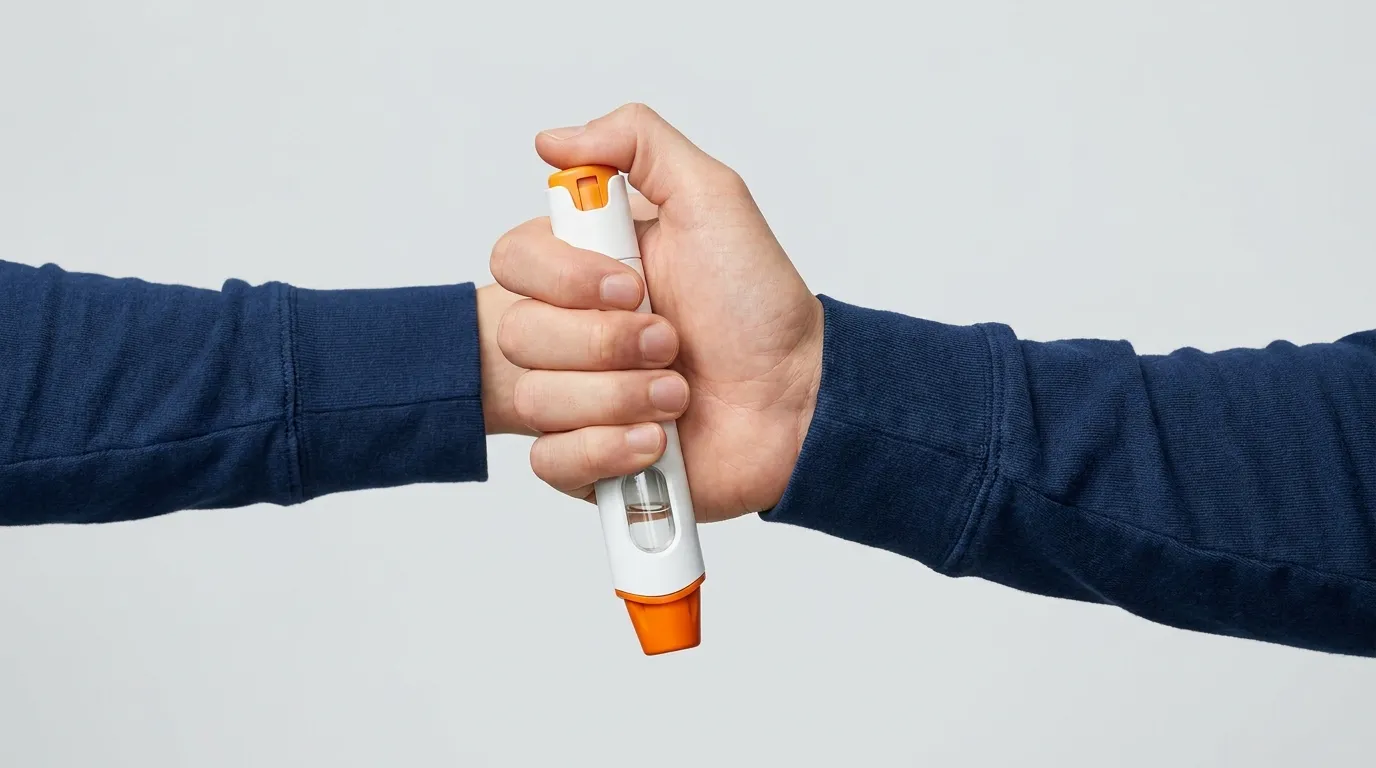
Epinephrine is the only first-line treatment for anaphylaxis. When in doubt, administer it immediately.
- Administer Epinephrine Immediately: If the person has a prescribed epinephrine auto-injector (like an EpiPen, AUVI-Q, or generic version), use it without hesitation. Do not wait to see if the symptoms get worse. Inject it firmly into the outer mid-thigh (it can go right through clothing) and hold it in place for the amount of time specified by the device instructions (usually 3 to 10 seconds). Epinephrine is the only medication that can reverse the deadly symptoms of anaphylaxis. Antihistamines will NOT stop anaphylaxis.
- Call Emergency Services (911): Dial your local emergency number immediately, even if the person feels completely better after using the auto-injector. Epinephrine can wear off, and a secondary reaction (biphasic reaction) can occur hours later. Tell the dispatcher clearly: “I am with someone who is experiencing a severe allergic reaction and having trouble breathing. We need an ambulance.”
- Position the Person Correctly: Keep the person lying down flat on their back. This helps maintain blood flow to their vital organs, preventing shock. Exception: If lying down makes it harder for them to breathe, or if they are vomiting, let them sit up slightly or roll them onto their side. Never force them to stand up or walk, as this can cause a sudden, fatal drop in blood pressure.
- Loosen Restrictive Clothing: Unbutton tight collars, loosen ties, and unbuckle belts to help them breathe easier.
- Monitor and Comfort: Stay right by their side. Reassure them and keep them as calm as possible. If they stop breathing, begin CPR immediately and continue until paramedics take over.
Could It Be Something Else? False Alarms vs. Real Danger
It is important to acknowledge that not all skin rashes are dangerous. We don’t want to incite panic over every dry patch of skin. There are plenty of conditions that mimic the red patches of an allergy, such as:
- Mild Contact Dermatitis: A localized reaction to poison ivy, a new soap, or cheap jewelry. It is itchy and annoying, but it stays localized to one area.
- Skin Infections or Eczema: Chronic conditions that cause red, flaky, or inflamed patches over time.
- Anxiety and Panic Attacks: This is a tricky one. A severe panic attack can cause flushing of the skin (redness on the chest and neck) and shortness of breath or a feeling of a tight throat.
However, while panic attacks and mild allergies exist, breathing difficulty paired with hives is the ultimate, critical difference. You cannot afford to guess if it is “just anxiety” or “just a mild rash” when someone’s airway is involved. It is always better to overreact to a potential allergy and be checked by a doctor than to underreact and face a tragedy.
The Final Takeaway: Knowledge is Power
Red patches on the skin plus breathing difficulty should never, under any circumstances, be ignored.
What may look like a simple, annoying rash could actually be the visible, outward sign of a massive, life-threatening allergic reaction happening inside the body. The combination of skin involvement and respiratory distress is the hallmark of anaphylaxis.
Your body is incredibly smart, and it will give you warning signs when it is in distress. It is our responsibility to listen to those warnings. Early recognition of these symptoms and incredibly fast action—administering epinephrine and calling 911—can, and will, save a life.
Have you or a loved one ever experienced a sudden, severe allergic reaction? What were the warning signs you noticed first? Share your experiences and spread awareness in the comments below—your story might just help someone else recognize the signs before it’s too late. Don’t forget to share this article with your family and friends; this is vital information everyone should know!
If you found this article interesting, please SHARE it with your friends and family!
Note: All images used in this article are AI-generated and intended for illustrative purposes only.
0 Comments