

Why Some Electrical Outlets Are Installed Upside Down
Have you ever noticed an electrical outlet with the ground hole on top instead of the bottom?
It might look like a mistake, but in many cases, the unusual orientation is intentional.
In older homes, ceiling lights were not always the standard they are today. Instead, builders often used wall switches to control lamps plugged into electrical outlets.
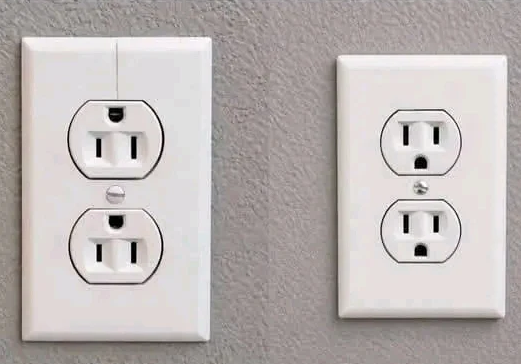
Installing an outlet upside down could serve as a simple visual clue that it was connected to a wall switch.
In some homes, only one of the two receptacles is controlled by the switch. The other remains powered continuously. That setup allows you to turn a lamp on and off from the wall while still keeping devices such as clocks, chargers, or routers plugged into constant power.
But there is an important detail: there is no universal electrical rule requiring outlets to be installed with the ground hole either up or down.
The orientation can vary depending on the region, electrician, construction era, local practices, or even the homeowner’s preference.
Sometimes, other considerations—such as commercial installation practices or safety preferences—can also influence how an outlet is positioned.
That’s why you shouldn’t assume an upside-down outlet automatically means it is connected to a wall switch.
If you’re curious about an outlet in your home, there’s a simple way to find out.
Plug a small lamp into it and try the nearby switches.
If the lamp turns on or off when you flip a particular switch, you’ve discovered what the outlet is connected to.
So the next time you see an outlet that looks “upside down,” don’t assume the electrician made a mistake.
It may simply be a small clue from the way the home’s electrical system was designed.
0 Comments