

Every parent knows the dread of a child waking up in the middle of the night. But when your little one wakes up complaining of an intense, unexplainable itching sensation, it can leave you feeling incredibly confused and helpless. If there is no rash, no allergy, and no bug bite in sight, you might be dealing with a very common, highly contagious, yet perfectly treatable childhood nuisance: pinworms.
First, take a deep breath. Let go of any parental guilt. The presence of these tiny parasites—scientifically known as Enterobius vermicularis—has absolutely nothing to do with bad parenting or a dirty home. They are a global phenomenon, affecting families across all socioeconomic backgrounds. Let’s dive deep into understanding the biology of this tiny intruder, the lesser-known symptoms, and the most effective, science-backed ways to banish it from your home for good.
The Secret Life of the Parasite: Understanding the Cycle
To defeat the enemy, you first have to understand how it operates. The life cycle of the pinworm is a masterclass in survival, and it happens in a few distinct, fascinating stages:
- The Unknowing Ingestion: The cycle almost always begins when microscopic eggs reach the small intestine through the mouth. Because these eggs are invisible to the naked eye, a child can easily ingest them after touching a contaminated surface—like a playground swing, a shared toy, or a school desk—and then putting their fingers in their mouth.
- Maturation in the Shadows: Once safely inside the warm, nutrient-rich environment of the small intestine, the eggs hatch. Over the course of a few weeks, they develop and grow into adult parasites, eventually making their way down to reside in the large intestine.
- The Dreaded Night Migration: This is where the midnight wake-ups begin. During the quiet hours of the night, when the host’s body temperature drops and they are still, female pinworms migrate out of the intestine to the outer skin surrounding the rectum to lay their eggs—up to 10,000 of them at a time.
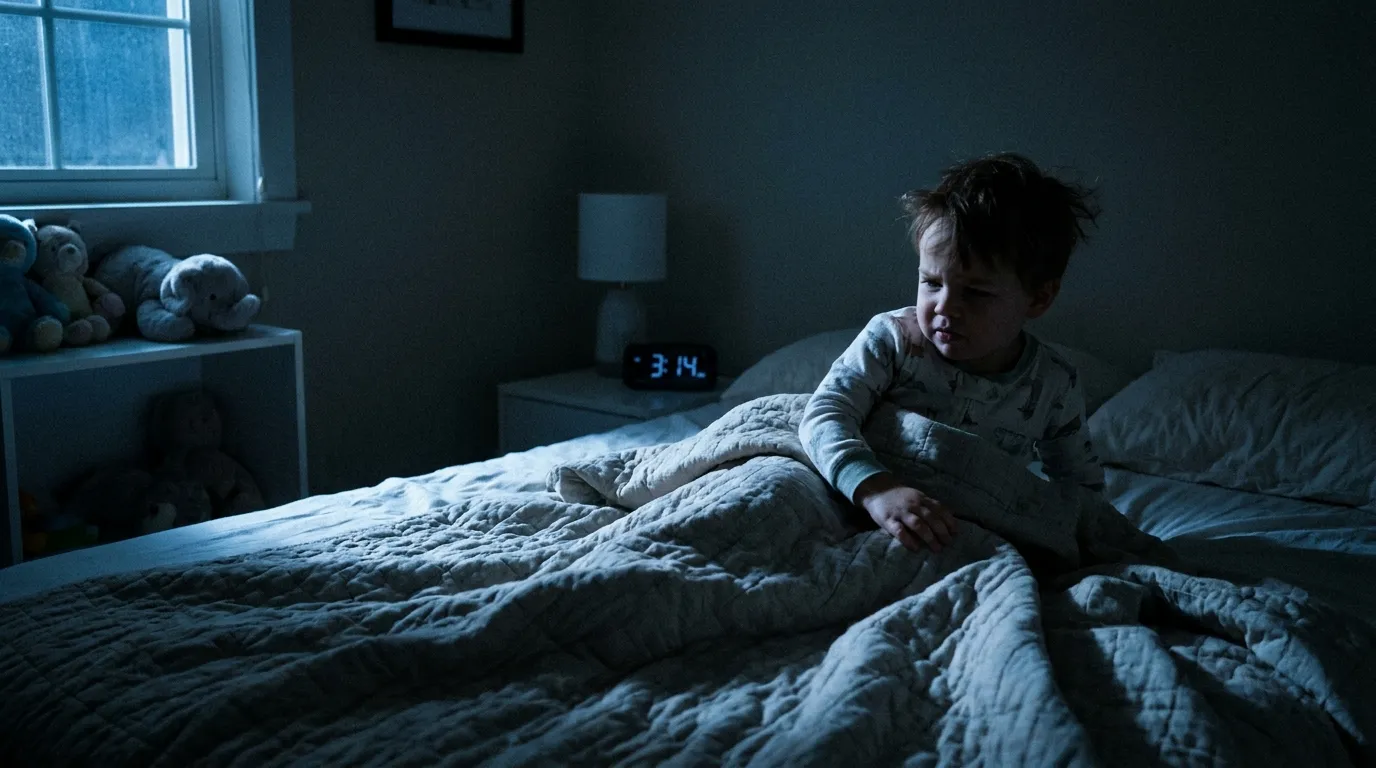
The nighttime migration of the parasite is the primary cause of intense sleep-disrupting itching and restlessness.
The female secretes a sticky, jelly-like substance to attach her eggs to the skin. It is this exact substance, combined with the physical movement of the parasite, that triggers severe, maddening irritation. Naturally, the child’s first instinct is to scratch the affected area, especially while they are half-asleep.
Beyond the Itch: Hidden Symptoms You Might Miss
While an itchy bottom is the hallmark sign, a pinworm infection can manifest in several other surprising ways. Because the parasite disrupts a child’s deep sleep cycle, you might notice behavioral or physical changes before you ever realize there is an infection. Keep an eye out for:
- Restlessness and Insomnia: Frequent waking, tossing, and turning without a clear cause.
- Bruxism (Teeth Grinding): The physical stress and discomfort can cause children to grind their teeth heavily in their sleep.
- Sudden Bedwetting: In younger children, the intense irritation in the pelvic region can lead to unexpected nighttime accidents in fully potty-trained kids.
- Mood Swings and Irritability: Simply put, a child who isn’t sleeping well will be cranky, fatigued, and easily frustrated during the day.
- Mild Stomach Pain: In rare cases with a high volume of parasites, children might complain of intermittent abdominal discomfort.
The Domino Effect: How the Infection Spreads
Scratching might provide temporary relief for your child, but it is actually the parasite’s clever mechanism for survival and reproduction. When a child scratches the itchy area, the microscopic eggs stick to their fingers and accumulate tightly under their fingernails.
From there, the spread is dangerously easy. As the child touches their toys, the bedding, doorknobs, or plays with siblings, the eggs are transferred. There is a particularly stubborn peculiarity to this parasite: the eggs are highly resilient. They can survive out in the open environment on surfaces, clothing, and bedding for up to two to three weeks at room temperature.
Cracking the Case: The “Graham Test” Explained
If you suspect your child is dealing with this nighttime nuisance, confirming it is relatively simple. Diagnosis is usually made using the so-called adhesive tape test (often referred to as the Graham test). Your doctor might ask you to perform this at home.
How it works: As soon as your child wakes up in the morning—before they use the bathroom, wipe, or bathe—you press a piece of clear, transparent cellophane tape against the skin around the rectum. Any eggs laid during the night will stick to the tape. You then place the tape in a sealed bag or on a glass slide provided by your doctor, who will examine it under a microscope to confirm the presence of eggs.

The Graham test is a simple, painless way for your doctor to confirm a pinworm diagnosis.
The Treatment Protocol: Eradicating the Intruder
Once diagnosed, it is time to take swift action. Treatment is highly effective but requires strict adherence to a few medical and environmental rules:
- Consult a Professional: Antiparasitic medications (such as Mebendazole, Pyrantel pamoate, or Albendazole) are highly effective. Some are available over-the-counter, but they should always be formally prescribed or approved by a healthcare professional to ensure the correct dosage for your child’s age and weight.
- The Crucial Second Dose: Medication only kills the adult worms, not the unhatched eggs. Therefore, you will be instructed to repeat the medication dose exactly two weeks later. This is vital to eliminate any new parasites that have hatched from lingering eggs before they can mature and lay more eggs.
- Treat the Whole Family: Because this infection is so easily transmissible, the simultaneous treatment of all household members—even those without symptoms—is heavily recommended as a preventative measure.
Environmental Warfare: Fortifying Your Home
Medication alone is only half the battle. To ensure the eggs are completely eradicated from your environment and prevent reinfection, you must implement a strict hygiene protocol for at least the two weeks between medication doses.

Daily vacuuming and exposing bedrooms to natural sunlight helps destroy resilient eggs.
- Launder Like Crazy: Gather up all bedding, pajamas, underwear, and towels and wash them in the hottest water possible. Tumble dry on high heat. Do this daily for the first few days of treatment. Avoid shaking out the bedding before washing, as this can launch the microscopic eggs into the air.
- Let the Sun Shine In: Pinworm eggs are famously sensitive to light. Open your blinds and curtains wide during the day to let natural sunlight flood the bedrooms and living areas.
- Hand Hygiene is Heroic: Encourage frequent and thorough handwashing with soap and warm water. This is especially critical before eating meals, after using the toilet, and immediately upon waking up.
- Vacuum Everything: Vacuum the floors, carpets, and even the mattresses in the bedrooms daily to suck up any eggs that have fallen off the host.

Keeping fingernails short prevents eggs from hiding and spreading through scratching.
- Keep Nails Clipped: Keep your children’s nails trimmed as short as possible to prevent any accidental egg buildup underneath them. Discourage nail-biting entirely.
- Morning Routines Matter: Enforce a strict morning bathing routine. Because the eggs are laid at night, washing the anal area thoroughly first thing in the morning reduces the number of eggs on the body. Additionally, ensure everyone is changing into fresh, clean underwear every single morning.
Dealing with a parasitic infection can feel overwhelming and uncomfortable, but armed with the right knowledge and a proactive cleaning routine, you can break the cycle entirely.
Disclaimer: It is important to remember that this article and its content are provided for informational and educational purposes only. It does not replace the formal evaluation, diagnosis, or treatment recommendations of a licensed health professional. Always consult your doctor or pediatrician if you suspect a parasitic infection in your home.
If you found this article interesting, please SHARE it with your friends and family!
Note: All images used in this article are AI-generated and intended for illustrative purposes only.
0 Comments